


Content
Most of the thefts involving virtual currencies are a result of people’s having the password, or private key, to a virtual currency wallet stolen or hacked. Virtual currencies are particularly vulnerable to this kind of attack because once a hacker moves money out of a wallet, there is no central authority to move it back. Any blockchain wallet or account is generally only as secure as its private key. More recently, many companies and governments have been interested in using blockchains to store data that has nothing to do with virtual currency transactions, or transactions of any sort. While banks are building blockchains that can track payments between accounts, governments are experimenting with using blockchains to store property records and votes.
A digital asset that has an equivalent value in real currency or acts as a substitute for real currency has been referred to by the IRS as convertible virtual currency. Bitcoin is one example of a convertible virtual currency. Bitcoin can be digitally traded between users and can be purchased for, or exchanged into, U.S. dollars, Euros and other real currencies or digital assets. While private keys are a security vulnerability, blockchains are generally more secure against attacks in which a bad actor tries to change the records in the database. Because of the way blocks are chained together, it is obvious when someone has tampered with old records.
Click the downloaded file at the top right of your screen, and follow the instructions to install Brave. Click the downloaded file at the bottom left of your screen, and follow the instructions to install Brave. Addressed certain issues related to the tax-exempt status of entities in the digital asset industry. Frequently Asked Questions on Virtual Currency Transactions for individuals who hold cryptocurrency as a capital asset and are not engaged in the trade or business of selling cryptocurrency.
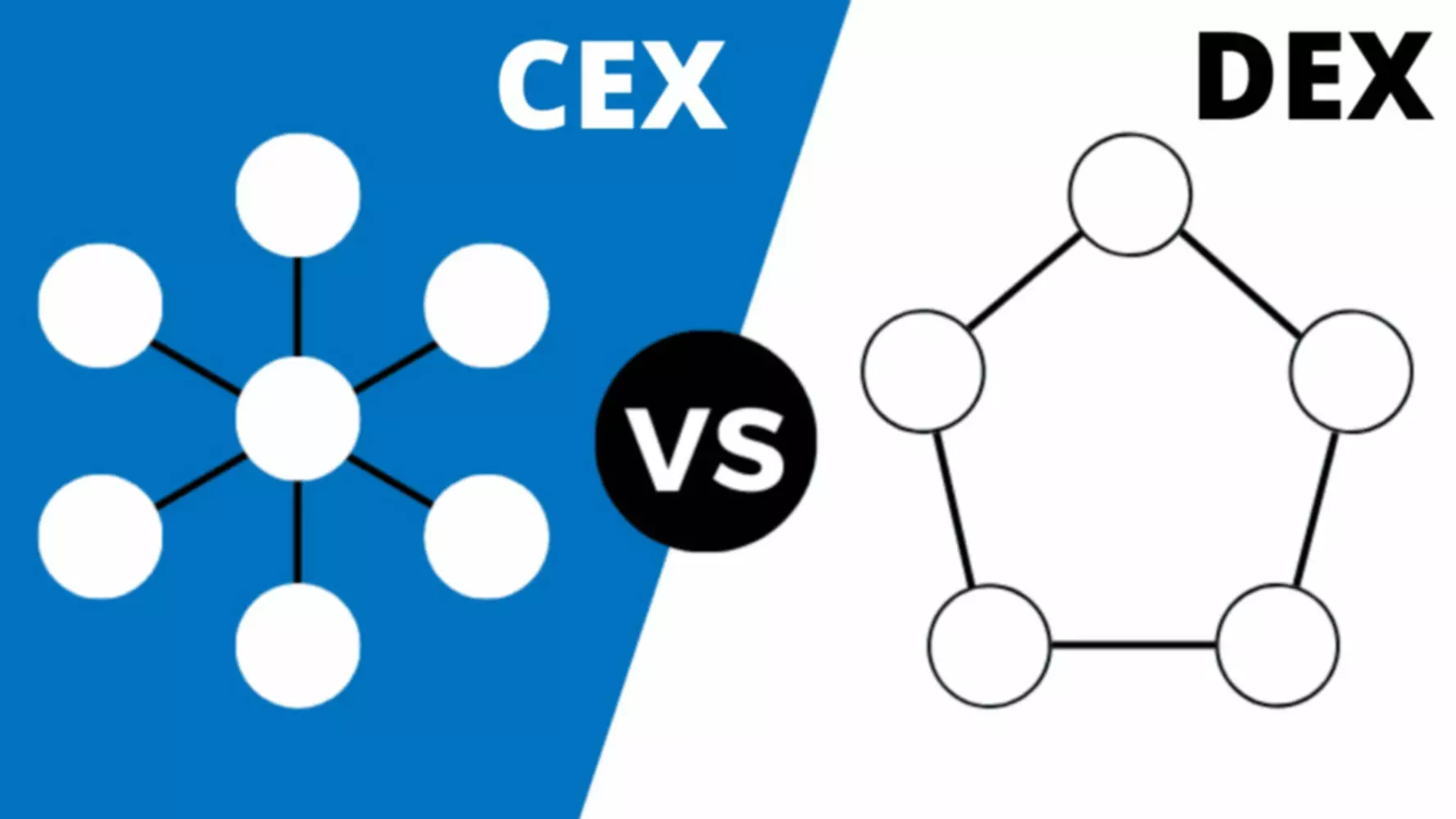
Then they must work together to add new blocks to the blockchain. Most databases used to keep financial records are maintained by a central institution. JPMorgan Chase, for instance, is responsible for keeping track of how much money is in all of its customers’ accounts. With Bitcoin’s blockchain database, the ledger is kept and updated communally by all the computers that are hooked into the Bitcoin network.
Introduction To Blockchain Technology
The data on these shared ledgers could be anything, but it’s most commonly a record of cryptocurrency transactions . For example, sending bitcoin from one person to another will incur a transaction fee (sometimes called a “gas fee”) for using network resources like electricity and computing power. In the world of blockchain, we refer to these network participants as “nodes”—they’re essentially the individual computers connecting to the blockchain network. They must communicate with one another about new transactions, or blocks of data, and verify their authenticity.
That makes it hard to go back and rewrite or monkey with the older records. Academics have pointed out that this design existed before Bitcoin, but Bitcoin brought it to prominence. The original blockchain consensus mechanism was pioneered by the Bitcoin network, and it’s called Proof of Work . As long as the majority of nodes are good actors, then a blockchain is safe from this type of manipulation.
Blockchain Com Wallet: Buy Btc
The fact that many computers are competing to verify a block ensures that no single computer can monopolize the Bitcoin market. To ensure the competition stays fair and evenly timed, the puzzle becomes harder when more computers join in. The Bitcoin protocol says mining will continue until there are 21 million Bitcoins in existence.
It costs a lot to make sure everyone’s records are in sync. Blockchains can potentially provide a more efficient way to do this so that everyone is always on the same page. When a database is maintained by a single authority, if that authority gets compromised by a hacker, or even by natural disaster, the people relying on that database can lose access to all their data. With a blockchain, all the people relying on the database can keep and update their own copy of the data. There’s nothing too out of the ordinary here because pretty much everything that’s currently on the internet works this same way.

Blockchains, Nodes, Cryptocurrency, Wallets… In this article, we’ll define some core Web3 terms, and scratch the surface of decentralized technologies. Provides guidance on FBAR reporting requirements related to digital assets. This issue, of how to keep everyone on the same page, is what the most important, but also the most confusing, bits of blockchain technology are aimed at resolving.
App Privacy
In this article, we’ll explain what these core terms are and how they work in Web3. Contrast this with traditional finance where only one node operated by a bank (the bank’s central server) needs to be manipulated rather than thousands of independent nodes . You can see how much more secure a shared ledger can be than a central database. Cryptocurrency is a type of digital asset that uses cryptography to validate and secure transactions that are digitally recorded on a distributed ledger or any similar technology. Virtual currencies have shown that blockchains can work at some level, but they also come with significant downsides.
- Any blockchain wallet or account is generally only as secure as its private key.
- This issue, of how to keep everyone on the same page, is what the most important, but also the most confusing, bits of blockchain technology are aimed at resolving.
- Digital assets are any digital representation of value that may function as a medium of exchange, a unit of account, and/or a store of value.
- To ensure that each block of transactions on the chain is verified, a subset of Bitcoin’s network joins a race to solve a difficult math puzzle.
- This system has made many big players looking at the technology uncomfortable.
- As long as the majority of nodes are good actors, then a blockchain is safe from this type of manipulation.
Learn more about the basics of blockchain technology. That means, for example, that Netflix has servers in a warehouse somewhere that are whirring away so you can stream your favorite shows. When you log in to Netflix to stream a show, your device communicates with those servers, sending data back and forth. Ultimately, Netflix has complete control over those servers. Netflix alone chooses what content is added to the platform, what streaming speeds are supported, and who can access their servers and how.
Blockchain
This model of the internet with centralized ownership is referred to as “Web 2.0.” Web3, however, is different. It’s the decentralized Web, and it aims to do things a bit differently—especially when it comes to servers and how you access things online. In Bitcoin, the process of mining, or creating new Bitcoin, also has a second purpose of making sure everyone is making the same updates to their copy of the blockchain. Most virtual currencies have used this process to coordinate everyone on the blockchain. Blockchain and cryptocurrency aren’t some weird, tangential part of the Web3 movement. They’re integral parts of the decentralization that makes Web3 possible.
Those transactions, batched into blocks, are added to the shared ledger by network nodes. Nodes are, in turn, compensated with cryptocurrency for their participation in the network. Crucially, there is no company, IT guy, or CEO that exercises control over a blockchain. Instead, individual network participants must come together as peers to reach consensus about the state of the network.
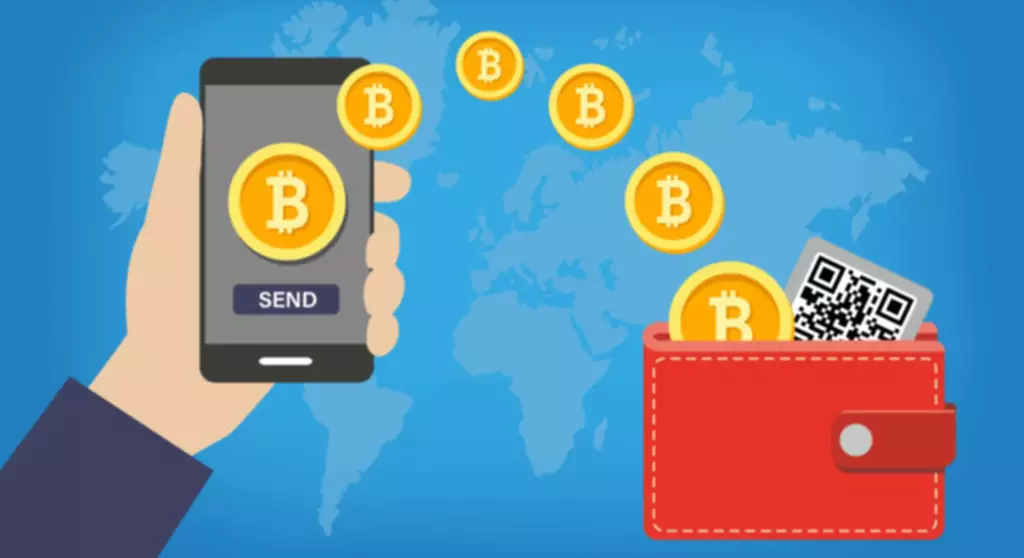
Say that Alice wants to buy a bike from Dan using Bitcoin, her cryptocurrency of choice. Alice begins by logging into her Bitcoin wallet with a private key, a unique combination of letters and numbers. With a traditional financial transaction, the exchanges get sent to banks on each side who record the money being subtracted from one account and added to another. But remember, in this scenario, there are no banks or middlemen. Instead, Alice’s transaction is shared with everyone in the Bitcoin network.
These networked computers add Alice’s transaction to a shared list of recent transactions, known as a block. Every 10 minutes, the newest block of transactions is added on, or chained, to all the previous blocks. To ensure that each block of transactions on the chain is verified, a subset of Bitcoin’s network joins a race to solve a difficult math puzzle.
NFT Bargain-Hunting Is in as Crypto Bust Craters Prices – Bloomberg
NFT Bargain-Hunting Is in as Crypto Bust Craters Prices.
Posted: Sat, 15 Oct 2022 14:00:00 GMT [source]
The state of the network includes things like who owns which assets, and who sent cryptocurrency to who. A blockchain network is Blockchain Trends a revolutionary new type of network that’s capable of being decentralized. Blockchain is what makes the new Web3 model possible.
A Guide to the World of Blockchain When the original blockchain arrived in 2009, it was a ledger for Bitcoins. Now the databases have spread to many companies and governments. Now, when visiting an app or website on Web3, you’ll be asked to connect your wallet. To do so, you’ll need both your wallet address and your private key—sort of like a password—to authorize the connection. Crypto wallets use private keys to access public “addresses” that can replace traditional login credentials.
File
Cryptocurrencies are digital assets that are linked to particular blockchain networks. Each blockchain typically has one cryptocurrency that is natively integrated with the network and its consensus mechanism. The Bitcoin network has bitcoin , the Ethereum network has ether , and so on. In Web 2.0, everyone’s computer connects to a company’s central servers—say, Wells Fargo, or Facebook—to log in and do stuff. In Web3, blockchain networks become the replacement for traditional, centrally managed databases and applications that gate users’ access to content, and store and manage their data.

The data is grouped together into “blocks” and strung together sequentially like a chain . As new blocks of data are processed, they’re appended to the end of the chain. Each block of data is crucial to the integrity of the overall chain—if one were to “break,” it would disrupt the entire chain. Describes the tax consequences of receiving digital assets as payment for performing microtasks through a crowdsourcing platform. Apart from the security, a lot of data is kept in a way that requires all the players to separately keep track of the records themselves. Banks, for instance, keep track of every transaction they do with other banks, even though the other banks are also keeping track of the same records.
Under PoW, one node is chosen to compile all the most recent transactions into a block and add it to the chain. Nodes compete against each other for this privilege by participating in a numerical puzzle; the first to solve it gets to “mine” the block, compiling its transactions and ensuring all the data is authentic. Then they broadcast the block to the rest of the network nodes, asking them to verify it.
An Intro To Blockchain And The Technology Thats Powering Web3
Brave is built by a team of privacy focused, performance oriented pioneers of the web. Many users rely on private browsers to keep their Internet habits away from prying eyes. But with so many options out there, what’s the best private browser for you? Need to third party for verification and execution of Transaction make the process complex.
The most valuable virtual currency other than Bitcoin is Ether, which runs on the Ethereum blockchain. In addition to recording virtual currency transactions, the Ethereum blockchain can record and execute simple programs. It is possible, for instance, to create a program on the Ethereum blockchain that will move Ether between wallets only after a specific event. With all this crypto being exchanged to facilitate the operation of decentralized networks, people need a way to store their assets. A crypto wallet is a way for Web3 users to store crypto, transfer it to others, pay transaction fees, and more.
Mindsets For Success: How Marketers Can Stand Behind Their Brave Ideas
You may have to report these transactions on your tax return. The first blockchain was the database on which every Bitcoin transaction was stored. Since https://xcritical.com/ Bitcoin began in 2009, the blockchain has come to hold over 160 gigabytes worth of data about every time a Bitcoin is sent between two digital wallets.
Download Brave
If any one computer keeping the records is hacked or knocked offline, the other computers can go on without it. These are the cryptocurrencies that make up the “block rewards” given out to nodes for adding or validating new blocks on the chain—basically the financial incentive for nodes to do their job well. Without crypto, node operators would have no reason to support blockchain networks other than their own good will. Earlier, we mentioned the need to align the incentives of independent blockchain network participants, or nodes, so that they can reach consensus about the network. The bitcoin is a cryptocurrency and is used to exchange digital assets online. Bitcoin uses cryptographic proof instead of third-party trust for two parties to execute transactions over the internet.